
Yeah, sometimes
Johannesburg, 1994

Last week I released a conversation with Sam Kiley. We talked for almost an hour about conflict, consequence and the current state of the world. I’ve known Sam for decades, and wrote this short essay in 1994, shortly after Sam came back from Rwanda. I've never published it before.
It was difficult to know what to say to Sam. Here we were firing round after round into the air, hundreds of doves overhead. The noise alone seemed to startle him. I could tell. His eyes looked so dead. So unlike him. And his smile. Well, I couldn’t find it. Couldn’t coax it out of him. I wasn’t even sure if it would be a good thing to try and do.
I didn’t want to come out and ask. What would I say? How was Rwanda? What’s it like to have a front row seat to genocide? I had read the stories he had filed, mixed in with all the others, and had watched the reports from Kigali. I could answer my own questions.
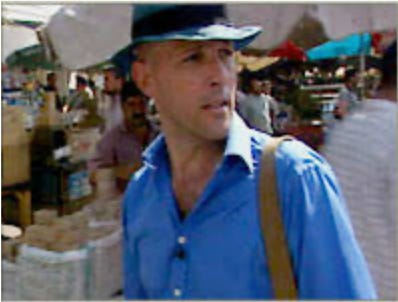
But to actually see him, to stand next to him, to try and pretend as if everything was still the same, that he had not been changed forever. That he wouldn’t see us, me, differently. With my smart leather boots and fancy English shotgun. Writing about what again? Oh yeah, agriculture and the environment. Maybe a bit of mining.
I watched as Sam’s boots crunched over the peppers. Hundreds of them, from bright green to tobacco brown, rotting on the ground. No one had bothered to pick them. I tried to avoid actually stepping on them, but could not avoid feeling responsible. It wasn’t my farm but it was my country now. My continent. And we had behaved badly.
“So much waste,” I said.
“What?” Sam said.
“The peppers,” I said. “The way they’ve been left to rot on the ground.”
I looked out over the fields, neatly plowed, the soil gently rippled like sand in the ocean shallows. Rich, dark earth the color of Italian espresso. Dotted with green blobs across the rows like some sort of agricultural pox. The land itself protesting, holding on to its quarry as a form of punishment for all of the insanity.
And I saw it. All of it in my mind’s eye. The insanity. The chaos. Bodies lining the sides of the roads, mostly face down, limbs contorted. The red dirt stained dark from gore. And from the bodies themselves returning to the earth. As if they wanted to leave as quickly as possible. Decomposing in a matter of days until only a shell of skin remained to be picked over by dogs.
I closed my eyes and inhaled the smell of death, what Sam had smelled, and heard the mortar fire and short bursts of automatic weapons. And I could see Sam there, the same khaki trousers, the ones with all those pockets, and torn olive jumper, the sleeves hopelessly misshapen from all that pulling. I opened my eyes and studied his face to see what he was feeling.
“Were you scared?” I asked.
“When?” Sam said.
“You know,” I said, kicking at the dark brown soil with the tip of my boot.
“In Kigali?” Sam said.
“Yeah,” I said. “In Kigali.”
He waited before he answered, the space between us almost viscous in a way that seemed to suspend everything, slow it down.
“Yeah,” he said. “Sometimes.”
The sound of a diesel engine whined in the distance, distracting both of us. Though it would be a minute or so before I actually saw the white Land Cruiser snaking its way up the dirt road that contoured the far side of the field. Darting in and out of the gum trees, their sage green leaves almost iridescent against the silvery sky. It smelled of rain, metallic and clean.
“I think it’s going to rain,” I said, after the car had passed.
“Smells like it,” Sam said.
Such refreshingly original writing...an unusual combination of the lightness of the souffle with the intensity of the consommé. A pleasure to read...